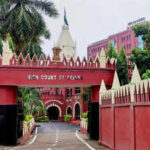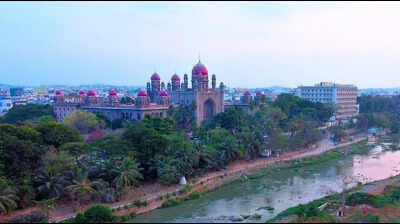
Hyderabad: The Telangana high court on Wednesday directed the state govt and Hyderabad Airport Metro (HAML) to file an affidavit detailing the status of applications seeking construction permission for phase-II of the Metro rail project, with specific reference to heritage structures and their precincts along the proposed seven-kilometre route connecting the Old City with the existing metro rail network.The court sought details on the stage of any construction activity affecting any heritage structure or its precincts and asked the authorities to clarify whether the conservation committee under the Telangana Heritage (Protection, Preservation, Conservation and Maintenance) Act, 2017 had been constituted and was fully functional. The matter was adjourned to March 3, 2026 for further hearing.
The directions were issued by a division bench comprising chief justice Aparesh Kumar Singh and Justice GM Mohiuddin after reviewing a powerpoint presentation submitted pursuant to an earlier order. The presentation focused on the proposed Metro alignment and asserted that the project did not affect any structures protected under the 2017 Act, contrary to allegations made in a public interest litigation and a connected writ petition.During the presentation, additional advocate general Mohd Imran Khan informed the court that 102 structures, including temples, mosques, chillas, dargahs and graves, including unnamed graves, were located either below or near the alignment and would remain untouched by the proposed track. He said only three old structures — an old GHMC building opposite Aza Khana Zohra, the clock tower at Raja Rai Devdi (Shyamraj Building), and Aliyabad Sarai — would be affected, and that these were in a dilapidated condition and had suffered rain damage.Khan stated that a Metro station was proposed at Raja Rai Devdi and efforts had been made to integrate the clock tower into the station design, but this could not be implemented due to the structure’s present condition. With regard to Aliyabad Sarai, he said the owners and tenants had already given consent for acquisition. He further submitted that the three structures had no religious connection and that the mandatory five-metre distance between the Metro track and all structures along the route was being maintained.Opposing these submissions, Immaneni Rama Rao, counsel in the PIL, contended that excavation and other works had commenced without mandatory approvals from the conservation committee, and even before the panel had been constituted. He said that despite earlier high court rulings that heritage structures cannot be reconstructed or recreated, works were undertaken at heritage sites. He disputed the claim that the old GHMC building was dilapidated, stating that the damage was caused by the demolition of a neighbouring structure by the govt, and added that several other structures were vulnerable to damage due to the project.Syed Yousuf, counsel in the writ petition, submitted that Aliyabad Sarai was a 300-year-old notified wakf property but was being treated as private property and acquired on the basis of consent obtained from alleged owners and tenants, whose ownership itself was disputed.