
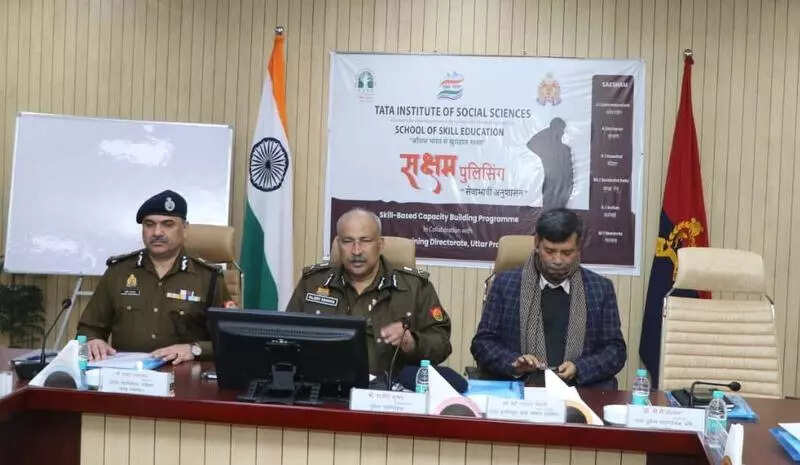
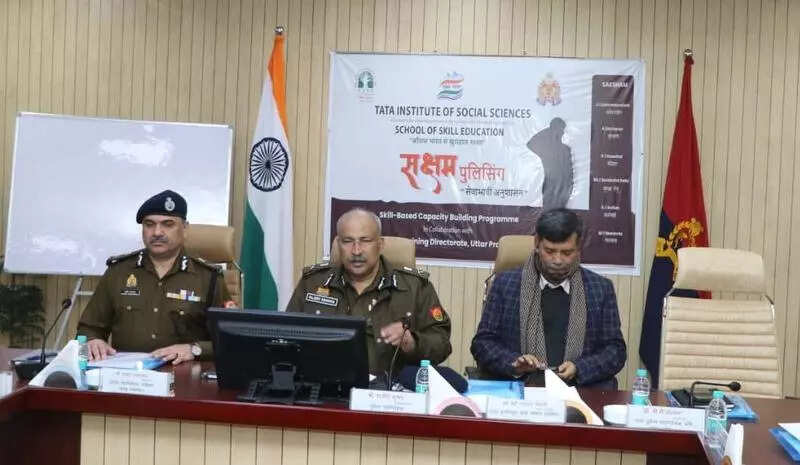
Addressing the participants, the DGP underlined that training is the foundation of both personal and professional development. He said that the success of the world’s best institutions and security forces lies in continuous, high-quality training, and stressed the need to accord greater importance to training within the police force. Highlighting that only 40 officers were selected from the nearly 400,000-strong UP Police for this pilot programme, the DGP described it as a matter of pride and responsibility. Emphasising that attitude and behaviour are as critical as knowledge and skills, the DGP said effective verbal and non-verbal communication plays a decisive role in shaping the police’s public image. He cited the national and global appreciation received by UP Police for its conduct during mega events like the Mahakumbh and Magh Mela as outcomes of improved training practices. TISS vice-chancellor Prof Badri Narayan Tiwari said policing in India is uniquely challenging due to complex social pressures, making sensitivity and empathy indispensable. He noted that linking the world’s largest police force with human-centric training is a crucial initiative, aimed at nurturing a more responsive and humane policing system. Police training directorate DG Rajeev Sabharwal said the programme aims to equip police personnel with balanced behavioural approaches, communication styles and modern technical awareness. The structured, skill-based capacity-building programme focuses on enhancing behavioural competence, operational soft skills and real-life decision-making abilities. Using experiential and activity-based learning methods, including case discussions and role play, the training prepares officers to respond professionally, sensitively and lawfully in high-pressure, public-facing and digital environments.