

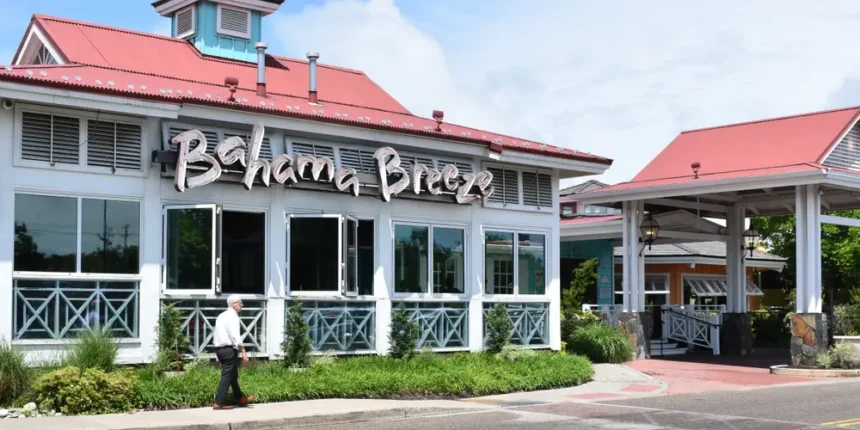
The End of an Era: Bahama Breeze Closes After 30 Years
Imagine walking from a suburban parking lot into a Caribbean paradise—vibrant colors, steel drum music, rum-filled pineapples, and the promise of island escape without needing a passport. For thirty years, Bahama Breeze offered precisely this experience to millions of guests across the United States. That journey has now reached its final destination.
In a watershed announcement made on February 3, 2026, Darden Restaurants—the parent company of Olive Garden, LongHorn Steakhouse, and several other prominent chains—revealed its strategic decision to permanently close 14 Bahama Breeze locations by April 5, 2026, with the remaining 14 locations to be converted to other Darden brands over the next 12-18 months. This marks the official end for a restaurant concept that once represented the pinnacle of thematic casual dining.
The closures will impact locations across several states, including Delaware, Michigan, Pennsylvania, New Jersey, North Carolina, Virginia, Washington, and Georgia. Meanwhile, the conversions largely preserve Florida locations, with four in Orlando alone, plus sites in the Carolinas, Georgia, and Virginia. Darden characterizes these as “great sites” well-suited for its other brands.
This decision didn’t materialize overnight. The strategic reassessment of Bahama Breeze began in June 2025 when Darden CEO Ricardo Cardenas announced the company was exploring “strategic alternatives” for the chain. By May 2025, Darden had already closed 15 locations, and recent financial performance told a concerning story: systemwide sales declined by 7.7% in 2024. The average Bahama Breeze location generated approximately $5.7 million in 2024, according to industry analyst Technomic.
The timing of this closure coincides with broader turbulence in the casual dining sector. In 2025 alone, multiple chains including Hooters, Bar Louie, and Razzoo’s Cajun Cafe closed units and filed for bankruptcy. Twin Hospitality announced it would close or convert most Smokey Bones restaurants in September 2025, while Bravo Brio entered bankruptcy for the second time last year. This wave of closures has created a glut of casual dining real estate, presenting both challenges and opportunities for remaining brands.
From Caribbean Dream to Corporate Reality: The 30-Year Journey
Bahama Breeze emerged from Darden’s ambitious diversification strategy in the mid-1990s. Founded in Orlando in 1996, the concept was designed to capture the spirit of the Caribbean islands with its vibrant decor, island-inspired menu, and lively atmosphere. Interestingly, despite its name and theme, there were never any Bahama Breeze locations in the actual Bahamas.
The restaurant experienced significant growth in its early years, expanding to 37 locations by 2003. However, this expansion was followed by a period of contraction, shrinking to just 23 locations by 2007. Following the Great Recession, Darden began investing in the concept again, and through the 2010s, Bahama Breeze experienced a renaissance, peaking at 43 units in 2019.
The concept was part of Darden’s “Specialty Restaurant Group,” which also included Seasons 52, Yard House, and other differentiated brands. This positioning highlighted its role as an experimental and aspirational concept within Darden’s broader portfolio of more mainstream chains like Olive Garden and LongHorn Steakhouse.
The restaurant’s pricing strategy positioned it as a premium option within Darden’s portfolio. As of mid-2025, the average check per person at Bahama Breeze was about $35. This compared to $24 at Olive Garden, $28 at LongHorn Steakhouse, and $104.50 at Ruth’s Chris Steak House. This middle-to-upper casual dining price point would ultimately become one of its challenges as consumer preferences shifted.
*Image Prompt: A historical timeline visualization showing key milestones in Bahama Breeze’s 30-year history, including its founding in 1996, peak locations in 2019, early 2025 closures, and final 2026 announcement.*
The Menu Legacy: What Made Bahama Breeze Special
Beyond the tropical decor, Bahama Breeze built its reputation on a distinctive culinary identity that blended Caribbean flavors with American casual dining expectations. According to a comprehensive review of 31 popular menu items, several dishes stood out as customer favorites that defined the brand.
Appetizers That Transported You
The Whole Jamaican Jerk Wings were a standout appetizer, featuring nearly two pounds of chicken wings with crispy skin and juicy meat coated in five-spice seasoning. The jerk BBQ sauce added a touch of sweetness without being overly sugary. For those preferring something slightly less messy, the beef empanadas offered an excellent alternative, filled generously and served with pineapple chutney and seasoned sour cream.
Signature Entrees
The Honey Butter Chicken Sandwich emerged as a top entree choice, featuring perfectly crispy yet tender chicken complemented by homemade jerk honey butter. What elevated this sandwich was the citrus mayo and pickles, which provided zest and acidity to balance the rich fried components.
For seafood lovers, the Jerk Shrimp Pineapple Bowl was a staff favorite, with its tangy and sweet jerk pineapple glaze playing perfectly against sautéed shrimp, rice, and sweet peppers. The visual appeal of this dish—served in a pineapple half—epitomized the restaurant’s commitment to thematic presentation.
Legendary Cocktails
Bahama Breeze built a substantial reputation on its elaborate tropical cocktails, which were central to the brand’s identity and appeal.
-
The Ultimate Pineapple: This iconic drink featured generous pours of both spiced rum and dark rum served in an actual pineapple. Known among staff as “a liability in a cup” due to its potency, it could also be ordered as a virgin drink, ensuring everyone could enjoy the theatrical presentation.
-
The Bahamarita: Described as “the prettiest drink on the menu,” this frozen margarita resembled a “SweeTART-Starburst hybrid” with different colored layers representing kiwi-melon (green), strawberry (red), and mango (orange). The accompanying spiked cactus-juice shot on the side added extra tartness when mixed in.
Sweet Endings
For dessert, the Chocolate Island stood out from typical restaurant brownie sundaes by featuring rich, fluffy chocolate mousse complemented by chocolate sauce and vanilla bean anglaise.
The restaurant also became known for its happy hour specials, with beers priced at $3 and specialty cocktails at $5 during designated times. These promotions helped drive traffic during slower periods and introduced new customers to the brand’s signature beverages.
The Decline: Why a Once-Popular Concept Faltered
Bahama Breeze’s closure resulted from multiple intersecting challenges that gradually eroded its competitive position. Understanding these factors provides insight not only into this specific brand’s fate but also into broader trends affecting thematic casual dining concepts.
Changing Consumer Preferences
The casual dining landscape has undergone significant transformation since Bahama Breeze’s peak. Consumers increasingly prioritize convenience, value, and authenticity—three areas where large thematic chains often struggle. The rise of fast-casual concepts offering higher-quality ingredients at similar price points with quicker service has drawn customers away from traditional casual dining establishments.
Additionally, the post-pandemic dining environment has shifted. While Bahama Breeze initially rebounded strongly from COVID-19, exceeding pre-pandemic sales in 2022, it faced declining sales in both 2023 and 2024. This suggests that despite initial pent-up demand for experiential dining, sustained recovery proved challenging.
Financial Performance Pressures
The financial metrics tell a clear story of gradual decline. From the middle of 2015 to late 2025, the number of Bahama Breeze restaurants dropped by approximately 22% while Darden’s overall restaurant count increased by 42% to 2,159 locations. This divergence highlights how Bahama Breeze became an underperforming segment within an otherwise growing portfolio.
The 7.7% systemwide sales decline in 2024 occurred despite generally favorable economic conditions for dining, indicating deeper structural issues with the concept’s appeal. When compared to Darden’s stronger performers like Olive Garden (4.7% same-store sales growth) and LongHorn Steakhouse (5.9% same-store sales growth) in the most recent quarter, Bahama Breeze’s struggles become even more pronounced.
Increased Competition and Market Saturation
The thematic dining space has become increasingly crowded, with numerous concepts vying for consumers seeking experiential meals. Additionally, the restaurant industry overall has faced pressure from rising labor costs, supply chain challenges, and inflationary pressures that have squeezed margins across the board.
The “Experience” Economy Paradox
Ironically, Bahama Breeze’s core strength—its immersive Caribbean experience—may have become a liability in an era when consumer expectations for authenticity have increased. As travel has become more accessible and cultural awareness has grown, a corporate interpretation of Caribbean culture may have felt increasingly inauthentic to sophisticated diners.
*Image Prompt: An infographic showing the decline of Bahama Breeze from 2019-2026, including key metrics like number of locations, systemwide sales changes, and average unit volumes compared to other Darden brands.*
The Business Behind the Breeze: Darden’s Corporate Strategy
Darden Restaurants’ decision to wind down Bahama Breeze reflects broader corporate priorities and strategic thinking that extends beyond this single brand. As the world’s largest full-service restaurant company with over 1,800 locations and 175,000 employees, Darden manages a diverse portfolio that requires continuous assessment and reallocation of resources.
Portfolio Management Approach
Darden has historically employed a disciplined approach to brand management within its portfolio. The company’s collection includes three fine dining chains (Ruth’s Chris Steak House, Eddie V’s Prime Seafood, and The Capital Grille) and seven casual dining chains (Olive Garden, LongHorn Steakhouse, Bahama Breeze, Seasons 52, Yard House, Cheddar’s Scratch Kitchen, and Chuy’s).
This structure allows Darden to categorize and manage brands based on their performance and strategic fit. Bahama Breeze was part of the “Specialty Restaurant Group” alongside Seasons 52 and Yard House—differentiated concepts that commanded premium pricing but operated with smaller store counts than mainstream brands like Olive Garden.
Historical Precedent: The Red Lobster Divestiture
The Bahama Breeze closure follows a similar strategic playbook to Darden’s 2014 divestiture of Red Lobster. That sale to Golden Gate Capital for $2.1 billion was controversial at the time, with activist investors criticizing the price as a “fire sale” undervaluing the chain’s assets. However, it allowed Darden to focus resources on its higher-performing brands.
The comparison is instructive: both Red Lobster and Bahama Breeze were foundational concepts in Darden’s history (Red Lobster was the company’s original restaurant), yet both ultimately were deemed non-core to the company’s future direction. This demonstrates Darden’s willingness to make difficult decisions about legacy brands when performance or strategic alignment falters.
Financial Impact and Investor Response
Notably, Darden has stated it does “not expect these actions to have a material impact on its financial results”. This suggests that Bahama Breeze had become a relatively small contributor to the company’s overall financial performance. Darden recently reported strong quarterly results with net sales rising 7.3% to $3.1 billion and raised its full-year revenue growth outlook to 8.5-9.3%.
Investors have responded positively to the announcement, with Darden’s stock rising 1.6% following the news and up 8% year-to-date. This positive market response suggests investors view the closure as a prudent allocation of resources toward more promising growth areas.
The Buyback Consideration
Some analysts have noted that Darden’s timing coincides with a $1 billion share repurchase program announced earlier in the year. While the company frames the Bahama Breeze decision as strategic portfolio management, critics suggest it represents “financial engineering” designed to boost earnings per share and support stock prices rather than a growth-oriented investment.
The Human Impact: Employees, Customers, and Communities
Behind the corporate announcements and financial metrics are real human stories of employees who built careers at Bahama Breeze and communities that embraced the restaurant as more than just a place to eat.
Employee Transition Plans
Darden has stated that its “primary focus will continue to be on supporting team members, including placing as many as possible in roles within the Darden portfolio”. This commitment reflects both ethical responsibility and practical necessity in a tight labor market where retaining experienced restaurant staff is challenging.
The transition will unfold differently based on location:
-
Employees at closing locations (14 restaurants) face imminent job loss as these units will cease operations by April 5, 2026.
-
Employees at conversion locations (14 restaurants) may have opportunities to transition to new roles as these sites are transformed into other Darden concepts over the next 12-18 months.
The hospitality industry has been particularly volatile in recent years, with many restaurant workers experiencing multiple disruptions due to pandemic closures, reopenings, and now concept changes. Darden’s commitment to internal placement will be tested as it attempts to absorb hundreds of employees across different markets and roles.
Customer Reactions and Memories
For loyal patrons, Bahama Breeze represented more than just a restaurant—it was a destination for celebrations, a consistent backdrop for family gatherings, and for some, a tangible connection to Caribbean culture or travel memories. The closure announcement has sparked nostalgia across social media platforms, with customers sharing memories of birthday celebrations, anniversary dinners, and tropical drinks that transported them momentarily from their everyday surroundings.
The restaurant’s motto—”Your island escape starts here”—captured this emotional connection. In an increasingly homogenized suburban landscape, Bahama Breeze offered a distinctive experience that stood apart from the countless burger joints, pizza places, and standard American fare options.
Community Impact
Bahama Breeze locations often served as community anchors in shopping centers and commercial districts. Their closure will have ripple effects on nearby businesses that benefited from the foot traffic they generated. Particularly for the 14 locations being permanently closed, landlords will need to find new tenants in a market already experiencing a glut of casual dining vacancies.
Some locations held particular significance in their communities. The original Orlando location (opened in 1996) represented the birthplace of the concept, while other sites had become local institutions over decades of operation.
Looking Ahead: The Future of Thematic Casual Dining
The closure of Bahama Breeze raises broader questions about the future viability of thematic casual dining concepts in a rapidly evolving restaurant landscape. While this specific brand is disappearing, the human desire for transportive dining experiences remains. How will this demand be met in the future?
Evolution of Experiential Dining
The next generation of experiential restaurants appears to be moving in several directions simultaneously:
-
Hyper-authenticity: Concepts that offer genuinely authentic cultural experiences, often with chef-driven menus and deeper cultural connections than corporate interpretations.
-
Flexible formats: Spaces that can transform for different occasions or even different concepts throughout the day or week.
-
Technology integration: Enhanced digital experiences that extend the theme beyond the physical space through augmented reality, interactive elements, or digital storytelling.
-
Sustainability focus: Concepts built around environmental themes that appeal to increasingly eco-conscious consumers.
Real Estate Implications
The closure of Bahama Breeze adds to a growing inventory of available casual dining spaces. This “glut of casual dining real estate” presents both challenges for landlords and opportunities for emerging concepts seeking second-generation spaces that require less capital investment than ground-up construction.
Darden’s plan to convert 14 Bahama Breeze locations to other brands represents one approach to this challenge. Rather than abandoning these sites, the company will repurpose what it considers “great sites that will benefit several of the brands in its portfolio”. This adaptive reuse strategy makes financial sense given the significant investment already made in these locations.
Lessons for Restaurant Concepts
Several strategic lessons emerge from Bahama Breeze’s 30-year journey:
-
Differentiation must be sustainable: A unique theme can attract initial interest, but long-term success requires ongoing relevance and adaptation to changing consumer preferences.
-
Premium pricing requires premium justification: At a $35 average check, Bahama Breeze competed in a challenging segment where consumers have high expectations for both quality and experience.
-
Corporate structure can constrain creativity: As part of a large publicly-traded company, Bahama Breeze may have faced limitations on menu innovation, pricing flexibility, or marketing approaches that smaller, more nimble concepts enjoy.
-
Cultural authenticity matters: As consumers become more culturally aware and traveled, corporate interpretations of cultural experiences face increased scrutiny.
The Caribbean Cuisine Niche
Despite Bahama Breeze’s closure, Caribbean flavors and concepts continue to resonate with American diners. The future likely belongs to more authentic, chef-driven interpretations of Caribbean cuisine rather than corporate versions. This trend parallels what has occurred with other ethnic cuisines, where corporate chains eventually give way to more authentic, localized expressions as consumer palates become more sophisticated.
Farewell to the Islands: Final Reflections on Bahama Breeze’s Legacy
As Bahama Breeze prepares for its final service, it’s worth reflecting on what this brand represented during its three-decade run and what its departure signifies for the restaurant industry and American dining culture.
What Bahama Breeze Got Right
At its best, Bahama Breeze delivered on its promise of providing an accessible island escape. It understood that not everyone could travel to the Caribbean, but many could appreciate a taste of that experience in their own communities. The brand excelled at creating a multi-sensory environment where the decor, music, food, and drinks worked together to create a cohesive experience.
The restaurant also demonstrated that thematic consistency matters. From the pineapple drinks to the jerk seasoning to the steel drum music, Bahama Breeze maintained its Caribbean theme across all touchpoints. This coherence helped build a strong brand identity that customers recognized and remembered.
The Broader Significance
The closure of Bahama Breeze represents more than just the end of a single restaurant chain. It marks the diminishing appeal of certain types of corporate dining experiences in an era when consumers increasingly value authenticity, transparency, and uniqueness. It also reflects the ongoing consolidation within the restaurant industry, where large operators focus resources on their highest-performing concepts while exiting underperforming segments.
For Darden specifically, this move continues a pattern of portfolio optimization that has seen the company divest or transform concepts that no longer align with its strategic priorities. Just as Red Lobster was sold in 2014, Bahama Breeze is now being wound down to allow greater focus on brands with stronger growth trajectories.
Final Days and Last Calls
For the 14 locations closing permanently, the final day of operation will be April 5, 2026. These last services will undoubtedly be bittersweet occasions for employees and loyal customers alike. Many locations may see an influx of visitors seeking one final taste of their favorite dishes or drinks, creating a sort of culinary wake for a departing friend.
The 14 conversion locations will have a different trajectory, gradually transforming into new concepts over the next 12-18 months. For these sites, the Bahama Breeze chapter will end not with a sudden closure but with a gradual metamorphosis into something new—a fitting transition for a brand that was always about transformation from the ordinary to the extraordinary.
Lasting Influence
While the Bahama Breeze brand will disappear, its influence may persist in several ways:
-
Culinary impact: Caribbean flavors introduced to mainstream American diners through Bahama Breeze may continue appearing in other concepts.
-
Experiential standards: The brand set a benchmark for thematic execution that may influence future restaurant designers.
-
Employee development: Many hospitality professionals received training and experience at Bahama Breeze that will serve them throughout their careers.
-
Corporate learning: Darden and other restaurant companies will undoubtedly study this case for lessons about brand lifecycle management and portfolio strategy.
As we say goodbye to Bahama Breeze, we’re reminded that restaurants occupy a special place in our cultural landscape. They’re not just businesses but settings for our memories—of celebrations, connections, and moments of escape from daily life. For thirty years, Bahama Breeze provided that setting with a distinctive Caribbean flair, and for that, it will be remembered by the millions who passed through its doors in search of their own island escape.