
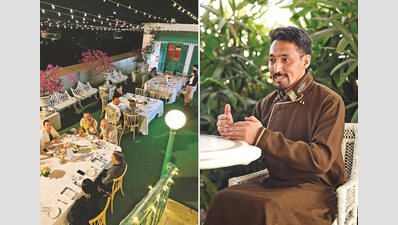
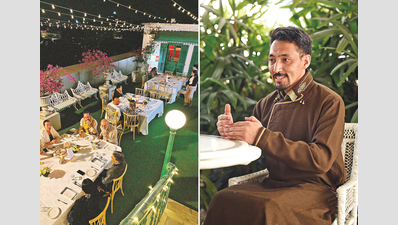
Monk turned chef, Jigmet Mingur has been a favourite of travel and food glossies with his distinctive take on Ladakhi cuisine. From his 10-seater Ladakh table, Mingur has been showing the world that there is more to the lunar landscape than a hundred shades of brown. That you can have a sumptuous, sustainable and nourishing meal, if you look in the right places, trust the seasons, go foraging and practice restraint. All this, with a gram-ready, fine-dine flourish. Argha Sen of Gormei got Chef to Glenburn Penthouse in Kolkata, with his signature Ladakhi ingredients and stories for a select few guests. Ahead of the pop-up, he spoke to CT about his food philosophy and journey.Humble beginningsBorn in Khemi village in Ladakh’s Nubra Valley, Jigmet entered monastic life at nine, spending nearly two decades across monasteries in Ladakh & Nepal. Cooking there was not creative choice but shared duty, and vegetarian kitchens taught him restraint & respect for ingredients. He says, “At 23, I moved away from monastic life and travelled to Goa. I spoke neither Hindi nor English, and started as a dishwasher at a shack to stay close to the kitchen.” Six years later, armed with technique but anchored to Ladakh, he returned, experimenting with small plates to give tourists and locals a taste of Ladakh’s food in a brand new avatar.
In the monastery, food was part of daily discipline; it was about care. During the 2015 Nepal earthquake, I felt food could actually help others
Jigmet Mingur
Farm-to-table with a side of foragingFor Mingur, luxury is not abundance but access. “Ladakhi cuisine has always operated within scarcity. Summers bring fresh greens; winters depend on dried leaves, fermented bread, root vegetables and stored grains. Barley anchors the system – shaped into bread, cooked into soups, and brewed locally,” chef explained. Buckwheat, winter peas, wild caraway, capers and seabuckthorn are essential ingredients to the cuisine.
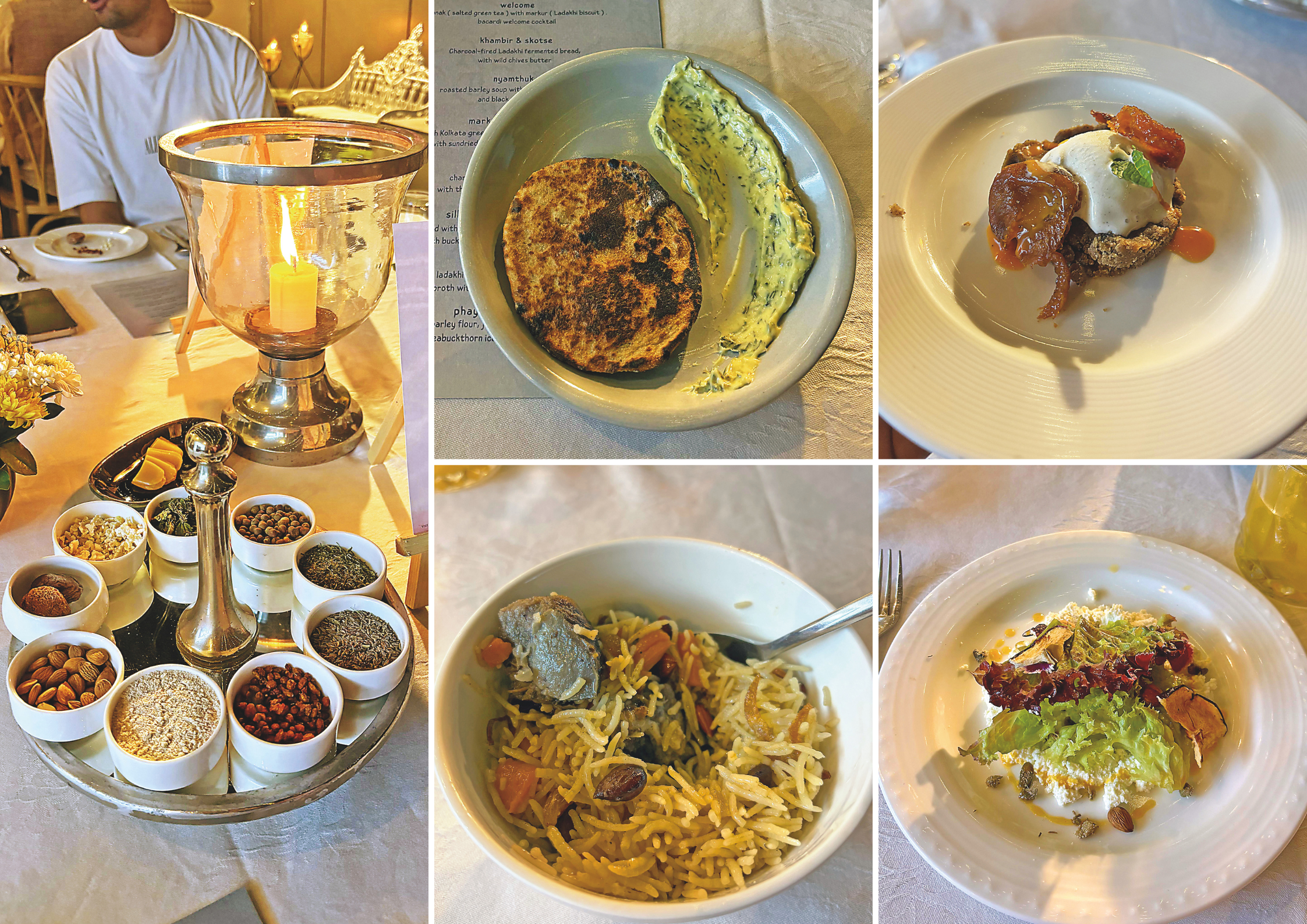
(Closckwise from left) Ladakhi ingredients at the dinner table for guests to taste; Grilled khambir with skotse (wild chives) butter; Seabuckthorn ice-cream & apricots; Kolkata greens, Ladakhi labo cheese, wild capers, sundried apple in a seabuckthorn dressing with apricot kernels; Yarkhandi pulaoPics: Aatreyee Mohanta
The Ladakhi menuThe meal started with khunak (salted green tea) and a Ladakhi biscuit. It was followed by charcoal-grilled khambir with skotse (wild chives) butter. Nyamthuk (barley soup with dried cheese and winter peas) was a warm bowl of goodness. Yarkhandi pulao, gyuma (sausages), and Ladakhi pasta in a broth showed a global take on the micro-cuisine. The meal ended with seabuckthorn ice-cream & apricots.
My menu changes every week. It’s a luxury is to pick wild herbs, grow your own vegetables, and forage ingredients you won’t usually find in the market
Jigmet Mingur
Chef’s favesFavourite Ladakhi ingredient & technique? Wild capers—and cooking on charcoal.A Ladakhi dish that deserves global recognition? Khambir, the region’s fermented bread.Winter or summer — when is Ladakhi food at its best? Summer, when greens & wild herbs come alive.Which other food cultures inspire you? Middle Eastern & Italian; I use Ladakhi ingredients with global techniques like a winter pea hummus.