
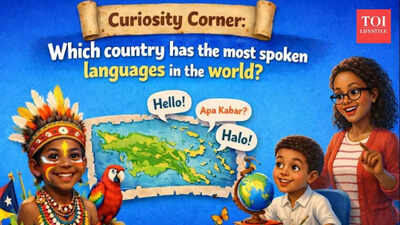
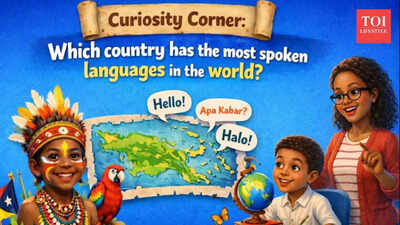
Words travel. They cross rivers, climb hills, and change shape as people grow up in different places. Some countries hear many languages every day, but one country hears more than any other on Earth. That country is Papua New Guinea, and its language story feels like a treasure chest waiting to be opened.
Meet Papua New Guinea, the language giant
Papua New Guinea sits near Australia, in the Pacific Ocean. It may look small on a world map, but it holds 840+ living languages, as per the data from Our World in Data. That means this one country has more languages than Europe and North America combined. Each language belongs to a real group of people, with their own songs, stories, and jokes.
Why so many languages in one place?
Tall mountains, thick forests, and deep valleys cover the land. For hundreds of years, villages stayed far apart. People met nature more often than neighbors. Over time, each community shaped its own words. A river here or a hill there slowly turned one language into many.
Languages born from daily life
Many languages in Papua New Guinea grew from simple needs. Words for rain, farming, fishing, and family came first. Some languages have special words for types of mud or forest sounds. That shows how closely children and elders listen to their surroundings while they are growing up.
What do children speak at school and home?
Most children learn a local language at home. At school, many also learn Tok Pisin, a common language that helps people from different regions talk to each other. English is taught too. Switching between languages becomes a normal part of childhood, like switching games.
How Papua New Guinea compares to others
With more than 700 languages spoken across numerous islands, Indonesia ranks second. Nigeria is next, with more than 500 languages that have been influenced by vibrant civilisations and history. Papua New Guinea continues to lead the world in spoken languages in a single nation.Every language carries feelings, ideas, and memories. When a small language disappears, a piece of the world’s thinking disappears too. Papua New Guinea reminds young minds that listening matters. Even the smallest voice has a story worth keeping.Disclaimer: Language counts are based on widely accepted linguistic research and may change as languages evolve, merge, or fall out of use. The numbers mentioned reflect current best estimates, not fixed totals.