


BENGALURU: This is the story of sweat, toil, and dedication of Bangalore Development Authority (BDA) engineers to outsmart the clock and see the Hebbal flyover downramp project through in record time because of false starts. Sleeping on factory floors and snatching just 2-3 hours of sleep, having meals at roadside dhabas, letting go of family time, festivals and New Year celebrations are some of the sacrifices made by engineers to recoup the time lost to bureaucratic wrangling.The long-awaited downramp is finally ready, much to the relief of commuters in north Bengaluru — after nearly 10 years of planning and repeated delays. BDA completed the 6-metre-wide and 1km-long ramp in Jan in under 18 months after overcoming multiple administrative, technical, and logistical challenges.
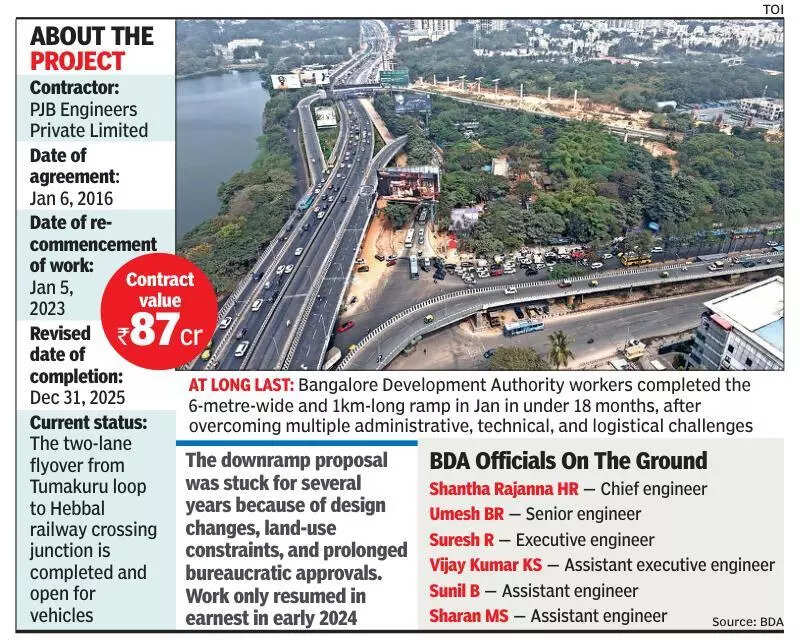
The ramp proposal was stuck for years because of design changes, land-use constraints, and prolonged bureaucratic approvals. When work resumed in early 2024, engineers had to coordinate continuously with Metro and railway authorities, urban transport agencies, and vendors to keep the project moving. Night-time construction, customised design adjustments, and real-time problem-solving ensured steady progress despite complex conditions such as active traffic, railway operations, and overlapping Metro and transport projects.
The project demanded no less than 100 on-site visits — at last count — by the BDA team.Assistant executive engineer Sharan MS, who along with a seven-member team worked tirelessly, said: “I had been married for just one month when I was sent to Ludhiana last year to oversee the manufacture of bolts to ensure they met the required standards. I don’t know about commuters, but my wife is extremely happy that the Hebbal ramp work is finally done.”

Umesh BR, executive engineer, said his son is “now very happy” because he gets to spend time with dad. “We hardly spent time with family. Our two years of hard work has paid off.”Explaining how the team completed work in just 1.5 years, Suresh R, executive engineer, said: “We visited the site and multiple offices every week. That is why we could do what would have otherwise taken three years. Normally, a project like this takes three years after approval. We completed it in less than half the time because we stopped working in silos and took ownership.”Umesh added: “For two years, we worked without breaks. There were no festivals, no New Year celebrations. We were either on site at night or running between offices during the day.”