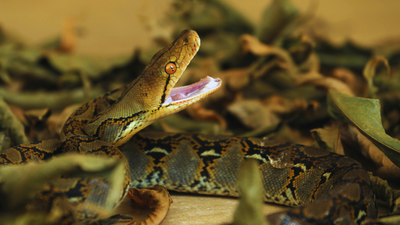
The Temple of Pythons is a rare sacred place where religion, history, legend, and living ritual come coiling together, quite literally, which is around snakes. The temple is deeply tied to Vodun, a spiritual tradition practiced across parts of West and Central Africa, particularly in Benin, Togo, and Ghana.
Through the African diaspora, Vodun beliefs travelled to the New World, influencing spiritual systems such as Haitian Vodou and Louisiana Voodoo.
Within this belief system, snakes are not feared creatures but revered symbols of protection, balance, and spiritual mediation. At the heart of Vodun theology stands Dan, the rainbow serpent: a sort of intermediary super being between our world and that inhabited by spirits.
Pythons, linked to this cosmic power, are revered as embodied divinity and not as creatures to be tamed or caged. Local lore lends the temple a rich sense of history. One such common tale is of the 1700s when the king of Ouidah was being pursued by enemies during a time of war. Racing into an adjacent sacred forest, the king took cover among the trees, and this, as legend goes, was when pythons started to appear from nowhere in the underbrush, surrounding him and standing in the way of his capture. Appreciative of the protection provided, the king ordered that monuments be built paying tribute to the snakes, which would eventually grow into what is now known as the Temple of Pythons.
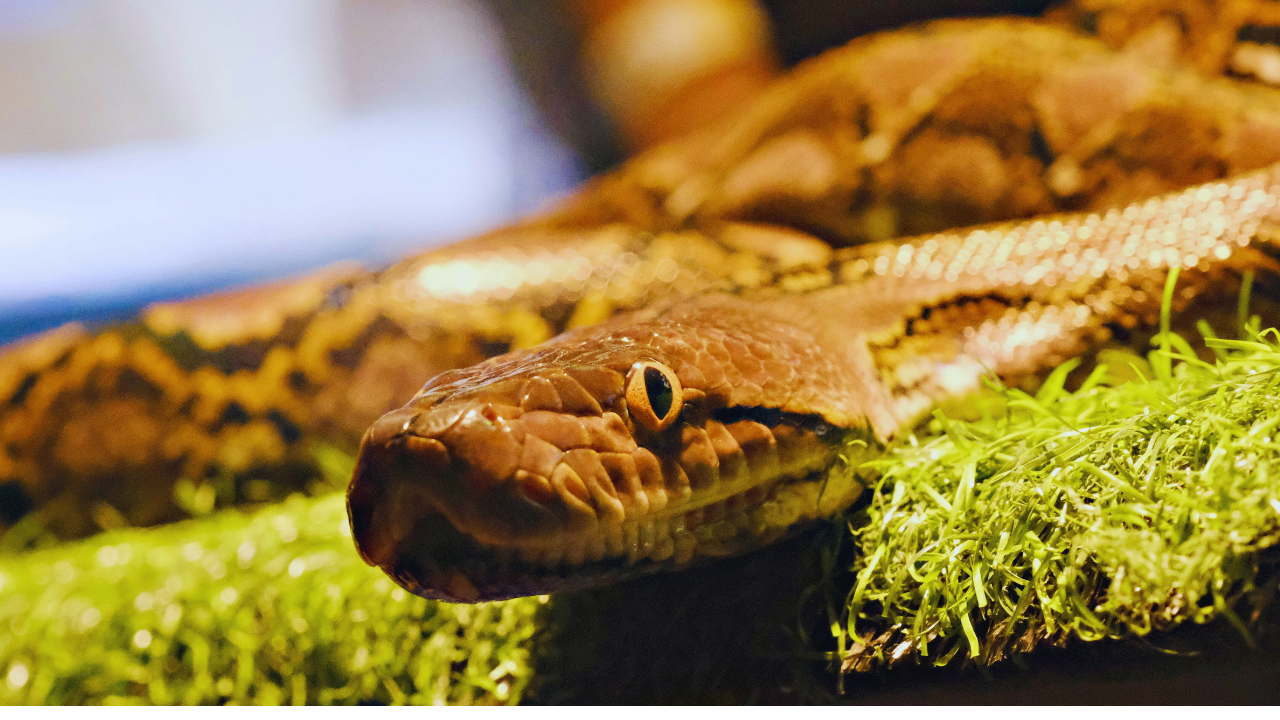
Another tale is told of a woman who is fleeing war and famine, she meets a python in the bush and takes it home with her. By night, the snake would wind through the adjoining fields eating rodents and pests,helping crops flourish. With time, the python was considered as not just a protector of food but a spiritual guardian. Today the Temple of Pythons is a small concrete building adorned with a clay roof. Inside is a pit where dozens of royal pythons, which are prized for their calm, docile and relentlessly slow-moving behavior, relax in coils on top of one another. It’s believed that about 60 pythons are kept at the temple site, which is also home to the largest number of sacred pythons found anywhere in Benin.The priests do not feed the snakes. They are set free into town on schedule, usually released during night time when they can go hunting for mice, rats and other pests.
It is not rare for pythons to end up in village houses. Once that happens, nobody in the neighborhood panics. The snakes are welcomed back as honored visitors.Contrary to popular fears, people are not in danger from Python. They are not poisonous and has such a gentle nature. Visitors can hold the snakes after a short hand-purification ritual, and for a fee they can have their photos taken. Guides help lead the way, to ensure visitor comfort and, more important, to protect the snakes.Apart from being a tourist destination, the temple is still used for worship. Some of the structures in the complex are for the public, some serve only prayer purposes.According to temple guides, the pythons are ceremonially-set free once a month to purify the town in rituals dating back centuries.In Ouidah, snakes are not symbols of danger or deceit. They are protectors, spiritual intermediaries, and living reminders of the town’s layered past. The Temple of Pythons is one of those rare places where myth, and faith still remain together, and without fear.