

As 2026 unfolds, Irish traders are becoming painfully aware of new rules in the landscape of international trade. As a consequence, the present environment is one of the most challenging of recent decades for both exporters and importers.
The main dilemma is not the method of trading, but the choice of markets to engage with in the coming year.
Navigating the complexities of international regulations is crucial, but selecting markets with stable regulatory oversight is more important than ever. The uncertainty stemming from the Trump administration has complicated trade with Ireland’s largest market, and recent developments involving Greenland, Iran, and Venezuela have heightened these challenges. Consequently, Irish traders are compelled to seek diversification and explore alternative markets to mitigate risks.
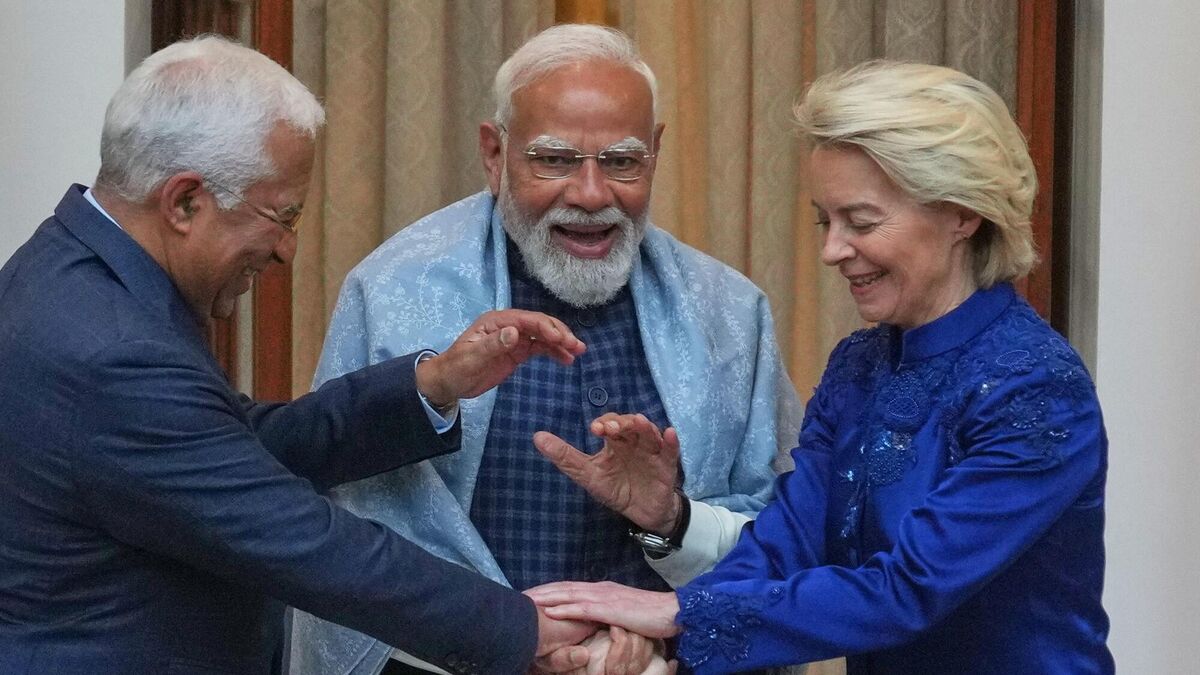
In this context, the newly announced EU-India trade deal, following closely after the Mercosur agreement, offers Irish exporters promising alternative avenues. Nevertheless, both agreements are subject to the long and complex approval processes inherent in the EU political system, which may delay their implementation for several years.
A preliminary assessment suggests that the most significant advantages of both deals for Irish traders will be found in the sectors of services, software, fintech, and e-commerce. This contrasts with the priorities of other EU countries, which are largely focused on gaining market access for vehicles and engineering goods. The automotive sector is the big winner. European carmakers – including Volkswagen, BMW, Mercedes-Benz and Renault – will see tariffs on their vehicles gradually reduced from the current punitive rate of 110% to as little as 10%.
Ireland’s goods exports to Mercosur countries — including Brazil, Argentina, Uruguay, and Paraguay — are mainly chemicals, pharmaceuticals, and beverages. These exports are valued at approximately €1.7bn annually, positioning Mercosur as Ireland’s 17th largest trading partner outside the EU. The proposed EU-Mercosur agreement is anticipated to substantially increase these exports, with notable growth expected in the pharmaceutical and dairy sectors.
In contrast, Irish goods exporters have encountered significant challenges in the Indian market. Export sales have remained between €500m and €600m over the past three years, focused on specialised products such as orthopaedic appliances, computers, and pharmaceuticals. Long-standing cultural and logistical barriers in India have hampered growth and are unlikely to be alleviated by the EU-India agreement.
Based on this analysis, the Mercosur agreement appears to offer more substantial benefits for Irish goods exporters than the EU-India deal.
However, the situation changes when examining services exports to both markets. The India trade agreement grants EU companies privileged access to the substantial Indian services market. Irish exporters sold €7.4bn in services to India in 2024, according to the Central Statistics Office (CSO). In comparison, the Latin American market — especially e-commerce — has matured, reaching sales volumes of €170bn in 2025, with Irish traders exporting an estimated €1.9bn.
The EU-India deal provides privileged access to the Indian services sector, while the Mercosur agreement offers immediate and comprehensive deregulation of digital transactions. In contrast to the gradual reduction of tariffs on physical goods, the virtual marketplace under the Mercosur deal is free from tariffs, presenting significant advantages for Irish e-commerce and services providers.
Ultimately, both free trade deals present valuable opportunities, with services exporters set to benefit from both, while goods exporters are likely to gain more from the Mercosur agreement. The EU-India deal will be more appealing to Irish farmers as the EU will maintain its existing tariffs on beef, chicken, and dairy, protecting farmers from competition.
Both trade deal offers Ireland’s whiskey distillers significant opportunities as import tariffs are planned to be slashed from 150% to 40% on sales into India, whereas import duties into Mercosur countries will be dropped from 35% to 8%.
Despite the promising prospects, the process of ratifying and implementing these trade deals can be drawn out. As seen with the Mercosur agreement, formal signing and legal vetting may take several months. Following this, adoption by the Council and subsequent approval by the European Parliament are required before the agreements can be enacted.
Taken together, the Mercosur and India trade agreements are expected to deliver modest economic gains in the short term. However, they lay the groundwork for future expansion, supporting Ireland’s export-driven growth model and offering a buffer against the impact of near-shoring and tariffs imposed by the Trump administration on Irish-US trade.