
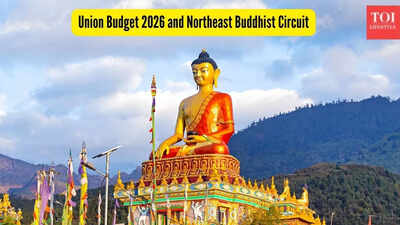
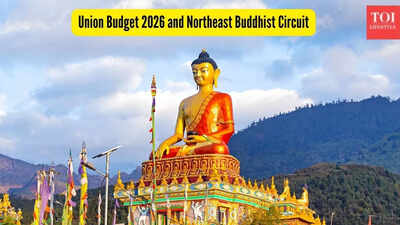
In a landmark move, Finance Minister Nirmala Sitharaman has revealed plans for a new Buddhist Circuit scheme for six Northeastern states in the Union Budget 2026–27. The budget was presented in Parliament on February 1, 2026 and this announcement marks a major policy shift to boost India’s religious tourism portfolio. This initiative will create a proper planned network of Buddhist pilgrimage sites across Arunachal Pradesh, Sikkim, Assam, Mizoram, Tripura, and Manipur. It’s a fact that despite being historically important, these states remain under explored.Cultural Tourism boostTourism was one of the prime highlights in the 2026 budget. The industry is a key driver of jobs and growth. The minister also announced plans of investment in electric transport and seaplane manufacturing. However, the development of Buddhist Circuit remains one of the prime features with immense potential to reshape travel across South Asia’s Buddhist travel network.Commenting on the development, Karan Agarwal, Director, Cox & Kings, said, “What stood out for me in this Budget is that it doesn’t treat travel as a one-sided story. Outbound travel needed a course correction, and cutting TCS on foreign tour packages to 2% does exactly that, it takes away a friction that travellers were feeling every time they planned a trip. On the inbound side, the intent is clearly longer-term. What stands out is the emphasis on cultural and experiential travel, whether through developing archaeological sites, strengthening Buddhist circuits, or building skilled local guide networks, tells us the focus is finally shifting to how India is experienced, not just how many people arrive. If this is executed well, it could move Indian tourism from being crowded and transactional to curated and experience-led.”Summing up the budgetTo sum up, Sitharaman explained that the Northeast presents deep cultural intersections of Theravada, Mahayana, and Vajrayana Buddhist traditions. The new scheme is designed to preserve Buddhist temples and monasteries. There are also plans to install interpretation and pilgrimage centres and improve transport along with digital connectivity for the convenience of tourists.Mr. Siddhartha Gupta, CEO, Yatra Online Limited, says, “India’s travel and tourism sector has reached a point where demand is well established across segments and geographies. The focus now has to be on building an ecosystem that allows this demand to scale in a more efficient, affordable, and predictable way, and the Union Budget 2026-27 takes steps in that direction.”It is a fact that while other Buddhist attractions including Bodh Gaya and Sarnath attract lakhs of tourists and pilgrims every year, the Northeast’s sites remain largely unexplored. But with better connectivity and infrastructure, the government plans a more integrated journey in the Eastern Himalayas.“The emphasis on experience-led growth—through integrated medical and tourism hubs, the development of immersive heritage destinations, and the expansion of eco- and nature-based tourism- significantly strengthens India’s appeal for international travelers seeking authentic, high-quality, and purpose-driven experiences. These initiatives not only diversify India’s inbound tourism narrative beyond metros and seasonal circuits but also distribute economic benefits more evenly across regions and communities”, commented Hari Ganapathy, Co-Founder, Pickyourtrail.Nikhil Sharma, Managing Director and COO, South Asia, Radisson Hotel Group, said, “The focus on sustainable and experiential tourism, including the development of Himalayan trails, the continued push for Buddhist circuits, and the strong policy thrust on the Northeast, will support the growth of diverse tourism segments while enabling more balanced regional development. These measures are expected to encourage longer stays, wider travel dispersal, and stronger demand for quality accommodation and services across tier-2 and tier-3 markets.“Appreciating the budget, Zubin Karkaria, Founder & CEO, VFS Global, said, “The Union Budget charts a strong roadmap to Vision 2047, positioning tourism, mobility, and human capital as engines of long-term growth. By recognising tourism as a catalyst for job creation, foreign exchange earnings, and regional development, the government is laying the foundation for a more competitive and resilient travel ecosystem. The emphasis on capacity building is particularly encouraging, with focused measures on infrastructure development, skill enhancement, and institutional support. These initiatives will play a crucial role in strengthening service quality, improving destination readiness, and enhancing ease of doing business across the sector.”What the Buddhist Circuit CoversSome prime Buddhist attractions in the Northeast region include:In Arunachal Pradesh:Tawang Monastery — One of the largest Buddhist monasteries in India In SikkimRumtek Monastery Enchey Monastery in Gangtok In AssamHayagriva Madhava Temple in Hajo — A site revered by Buddhists as well as HindusIn ManipurHosts historic Buddhist communities and templesIn MizoramThere are several Buddhist heritage sites which underscore the diversity beyond common travel circuits.In TripuraKalachand Temple and other heritage sitesThere’s no doubt that these states struggle because of lack of proper infrastructure and harsh weather. But things look positive for these states now as the Buddhist Circuit scheme in the Northeast stands as one of Union Budget 2026’s most visionary travel announcements.