

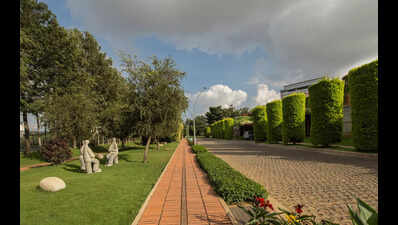
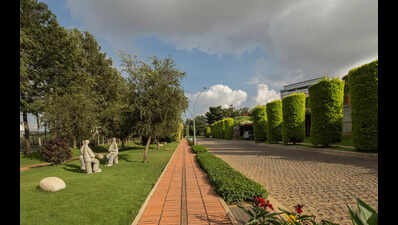
Miyawaki forests are today part of several real estate projects. There’s at least one project that has what it calls a tree museum – hosting a diverse set of trees. There are projects with large terrace gardens and green roofs. Developers and communities are actively trying to go green and preserve natural resources like water and energy. These green communities function on the core pillars of resource-efficient building materials, water efficiency (reducing dependence on borewells and tankers), energy efficiency (homes using roughly half of conventional consumption), and community waste management. “A truly green apartment is not a checklist, but a calibrated balance of climate, comfort, cost, and community,” says Anup Naik, architect, urban designer and chairman of Indian Green Building Council (IGBC), Bangalore Chapter. IGBC is the primary body, rating both new and retrofit housing projects. The rating is currently optional, but IGBC is in talks with govts to make green compliance part of policy and to introduce incentives such as property tax reductions, additional FAR/FSI for developers, and lower interest rates from financial institutions for green-rated projects. “Around 9-10 Indian states already offer such benefits. Karnataka may follow once sufficient precedent is established,” Naik says. Adding value with green certifications In Bengaluru, 326 residential projects with 260.8 million sqft have registered with IGBC’s Green Rating under the residential portfolio so far. To receive an IGBC certification, a project has to show that it is designed and operated in an environmentally responsible manner. IGBC uses a credit system calculated based on green measures and features implemented in a project. Naik notes there is growing awareness in Bengaluru, especially among older apartment communities that are retrofitting to reduce water and energy use and improve waste management, even before formal rating systems have become mandatory. Kamal Sagar, founder of Total Environment, is among those who finds joy in creating homes where indoor and outdoor spaces blend seamlessly. A number of his projects are IGBC certified, often achieving the highest Platinum rating. Sagar says every detail that goes into these apartments is carefully thought out, from tall grasses and wildflowers that promote biodiversity to materials used in construction, such as recycled bricks, wood, and natural stone, that help the buildings last longer. “Forests are created within the projects, and they act as powerful carbon sinks. Dense vegetation, trees and soil remove greenhouse gases from the atmosphere, absorbing more carbon than they release,” he says. Water conservation is also a key part of his green philosophy. Creating water sustainable projects Biodiversity Conservation India’s T-Zed Homes in Whitefield was one of the earliest IGBC certified homes in India. The project is said to have not required tanker water over the last 20 years, aided by numerous open wells. These open wells are also healthier and more sustainable than deep borewells, says Chandrasekhar Hariharan, founder of Biodiversity Conservation, who is also an environmental economist. He adds, “While we created the initial green infrastructure, the entire credit goes to the proactive green community of residents who have furthered the Net Zero objectives.” Hariharan notes that borewells in the surrounding areas have dried up, and tanker dependence is constant. So what does it take to build a truly green apartment or home? Pat comes his reply: “It starts with choosing the right transdisciplinary architect – one who integrates water, energy, ecology, and hydrology into design rather than treating each as separate. Conventional engineering focuses on draining water away instead of retaining it on-site.” VOICE BOX In Tune with Nature A truly green apartment is not a checklist, but a calibrated balance of climate, comfort, cost, and community. We still have a long way to go towards this goal.
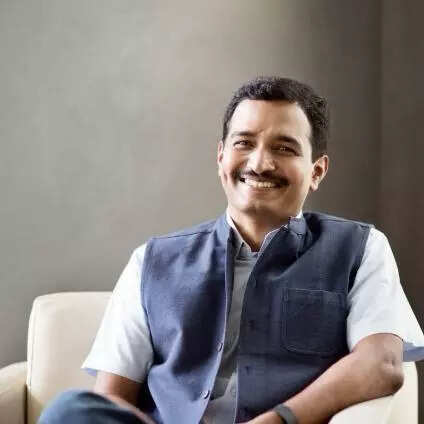
Anup Naik
While creating a green building, you look at how you work on the sun path, how you get air movement into your building. It could mean minimal site disturbance, saving existing trees within the area and topsoil conservation. Topsoil takes millions of years to form. The architecture should encompass shading devices to cut down heat gain within. Cross ventilation helps improve air quality. Green rated appliances can be used for energy efficient lighting. Solar and wind energies reduce power consumption. Anup Naik, ARCHITECT, URBAN DESIGNER AND CHAIRMAN, INDIAN GREEN BUILDING COUNCIL, BANGALORE CHAPTER Designing energy-efficient buildings involves utilising low-flow fixtures, and implementing advanced wastewater treatment systems. It involves investment in technologies like smart meters that help us control water in real-time and limit wastage.

Viswa Prathap Desu
Efforts should extend to energy efficiency through solar panel installation and smart electrical systems. Prioritise recycling and reuse of materials and manage waste innovatively. Focus on biodiversity through extensive tree planting initiatives and the creation of ‘Urban Forests’. Viswa Prathap Desu, CHIEF OPERATING OFFICER, RESIDENTIAL, BRIGADE GROUP Bengaluru requires about 730-750 billion litres per year. Apartment communities (more than individual homes, due to cost viability) should take primary responsibility for improving water efficiency and security. Karnataka State Pollution Control Board has already provided a framework of regulations that, if fully complied with, can reduce freshwater demand by 60% without reducing comfort.

Chandrasekhar Hariharan
Apartments should install aerators and water-efficient fixtures, but with professional assessment rather than buying off-the-shelf. Treat and reuse at least 50% of wastewater for flush tanks and gardens with expert help, preferably using energy-free, long-lasting, low/zero-maintenance systems instead of conventional SBR/MBR (sequencing batch reactors / membrane bioreactors (MBR). It is also important to capture and use rainwater during monsoon months (roughly May-October), with basic treatment (such as, activated carbon filtration, pressure sand filter, UV filtration) guided by an expert. Apartments should also digitise and monitor water use to manage consumption effectively. Chandrasekhar Hariharan, TRUSTEE, ALTTECH FOUNDATION AND FOUNDER OF T-ZED HOMES Sustainable apartments address the urban disconnect. By integrating green spaces and collective waste systems, communities tap into Biophilia, reducing cortisol levels and urban stress. Initiatives like solar energy, rainwater harvesting, and on-site composting transform residents from passive consumers into active stewards.

Anwesha Paul
Ultimately, a green apartment isn’t just an infrastructure upgrade; it is a psychological sanctuary that nurtures social cohesion and mental resilience in an increasingly volatile world. Anwesha paul, FINAL YEAR PSYCHOLOGY STUDENT, BENGALURU UNIVERSITY, AND RESIDENT, GNRR RESIDENCY, MUNNEKOLALA Our project has close to 70% open space, making it one of the most green-intensive residential communities in the region. A unique feature is the forest trail developed across the entire perimeter of the compound, offering residents a natural walking ecosystem that promotes biodiversity, fitness, and mental well-being.

Mahendra Kumar
Every residential block opens into green entrance zones, landscaped seating areas, and a centrally designed boulevard. These green corridors reduce heat, improve air quality, and create natural social spaces for residents. The community also actively promotes sustainable practices such as native and drought-resistant plantations, rainwater harvesting and groundwater recharge, waste segregation and composting. Mahendra Kumar, PRESIDENT, PROVIDENT PARK SQUARE OWNERS ASSOCIATION, KANAKAPURA ROAD