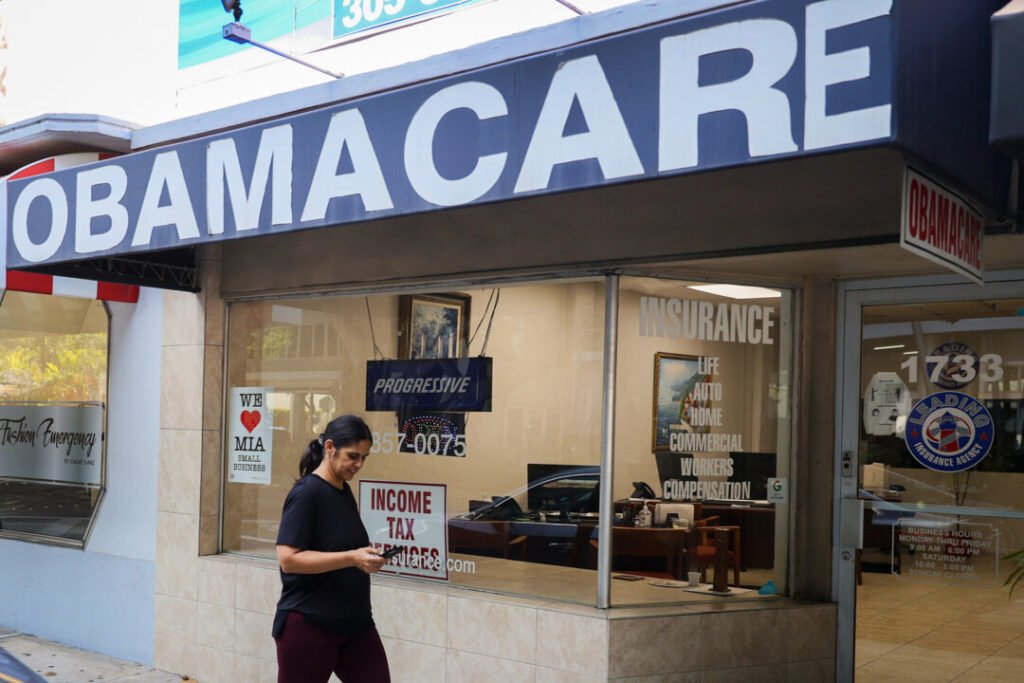
Taxpayers spent $65 billion on health insurance premiums for people who either didn’t exist or didn’t qualify for benefits in two federal programs in 2024, according to an Aug. 26 report from Paragon Health Institute.
Expanded Medicaid and Obamacare, the signature programs of the Affordable Care Act, improperly enrolled a combined 14.3 million people that year, researchers concluded.
Expanded Medicaid allows states to enroll people making up to 138 percent of the federal poverty level, versus up to 100 percent for traditional Medicaid. That limit was about $35,600 for a family of three in 2024.
Obamacare was open to people earning up to 400 percent of the federal poverty level at that time, about $103,000 for a family of three.
Both programs are administered through the Affordable Care Act Marketplace, with coverage provided by commercial insurance companies.
Researchers estimate that about 34 percent of all Marketplace enrollees in 2024 were either fraudulent, duplicates, or simply didn’t meet the benefit criteria. And the number went up the next year, researchers said.
Related Stories


“Improper exchange enrollment increased by more than 26 percent from 2024 to 2025—up to an estimated 6.5 million enrollees,” the report stated.
Enrollment Problems
Researchers studied federal data from surveys, program enrollment, and spending and concluded that more than 9 million Medicaid expansion enrollees in 2024 probably didn’t qualify for the benefit.
Those were likely people whose income was over the limit, did not meet citizenship, immigration, or residency requirements, or should have been enrolled in traditional Medicaid.
With Obamacare, the $0 premium policies made possible during the post-COVID years became a target for fraud, according to Paragon President Brian Blase.
Testifying before Congress in December, Blase said many people were enrolled in the program without their knowledge by unscrupulous insurance brokers, prompting the federal government to send a commission check to them—and premium payments to an insurance company.
These phantom enrollees are detected in part by their lack of activity once enrolled, Blase said.
Also, 28 states had more people enrolled in Obamacare than there were people in the state who met the income requirements.
Skepticism
Based on previous reports, some observers have questioned the assertion that improper enrollment, particularly in Obamacare, is as widespread as the think tank concluded.
“There is no evidence of systemic fraud, waste, or abuse in [state-based marketplaces],” according to Covered California, the state’s health insurance marketplace.
As for the lack of activity by some enrollees, America’s Health Insurance Plans released a statement in 2025 saying, “A ‘no-claims’ year is evidence that a consumer stayed healthy or only had a few months of coverage—not that taxpayer money was misdirected or that their policy was illegitimate.”
Others observers say Paragon’s research method doesn’t factor in all the variables. “There are a number of reasons why people who report incomes somewhat above 138 percent of the poverty line in a survey may be eligible for the Medicaid expansion,” the Center on Budget and Policy Priorities said about a previous Paragon report.
Yet in December 2025, the Government Accountability Office reported that investigators were able to enroll 20 nonexistent identities in Obamacare in 2024 by using Social Security numbers that had never been issued to any person and other easily created counterfeit documents.
Of the 20 false enrollments, 18 were still active in September 2025, costing taxpayers more than $10,000 per month.
Investigators also found 26,000 accounts that received subsidies in 2023 based on Social Security numbers that matched records in the Social Security Administration’s death file.
Savings and Recovery
That includes suspending agents and brokers from the program for suspected fraud, reinstating data matching between federal programs to prevent duplicate enrollment, canceling phantom enrollments, and requiring Medicaid eligibility recertification every six months.
The Centers for Medicare and Medicaid Services reported in January it had removed more than 1 million enrollees who were concurrently enrolled in Obamacare and Medicaid or the Children’s Health Insurance Program, or who had failed to file and reconcile previously received subsidies.
Another 250,000 were removed who’d been enrolled without their consent.
Those actions produced $10 billion in annual savings, according to a government statement.