

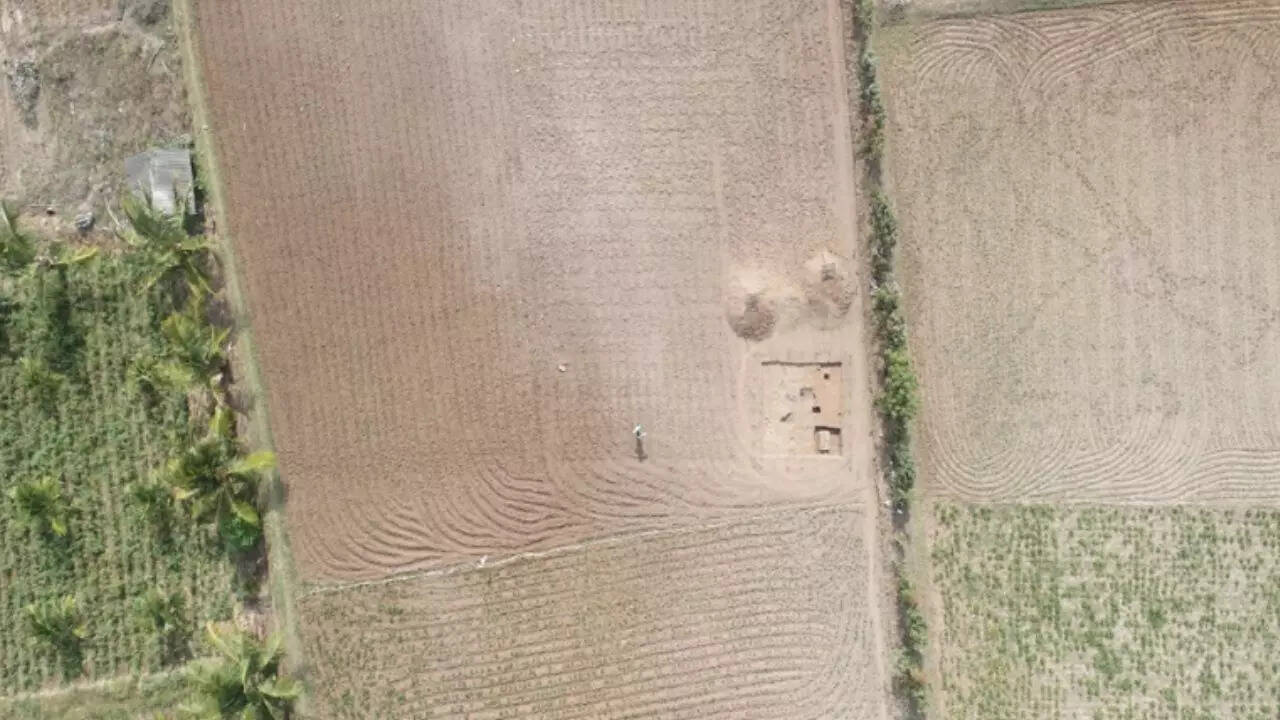
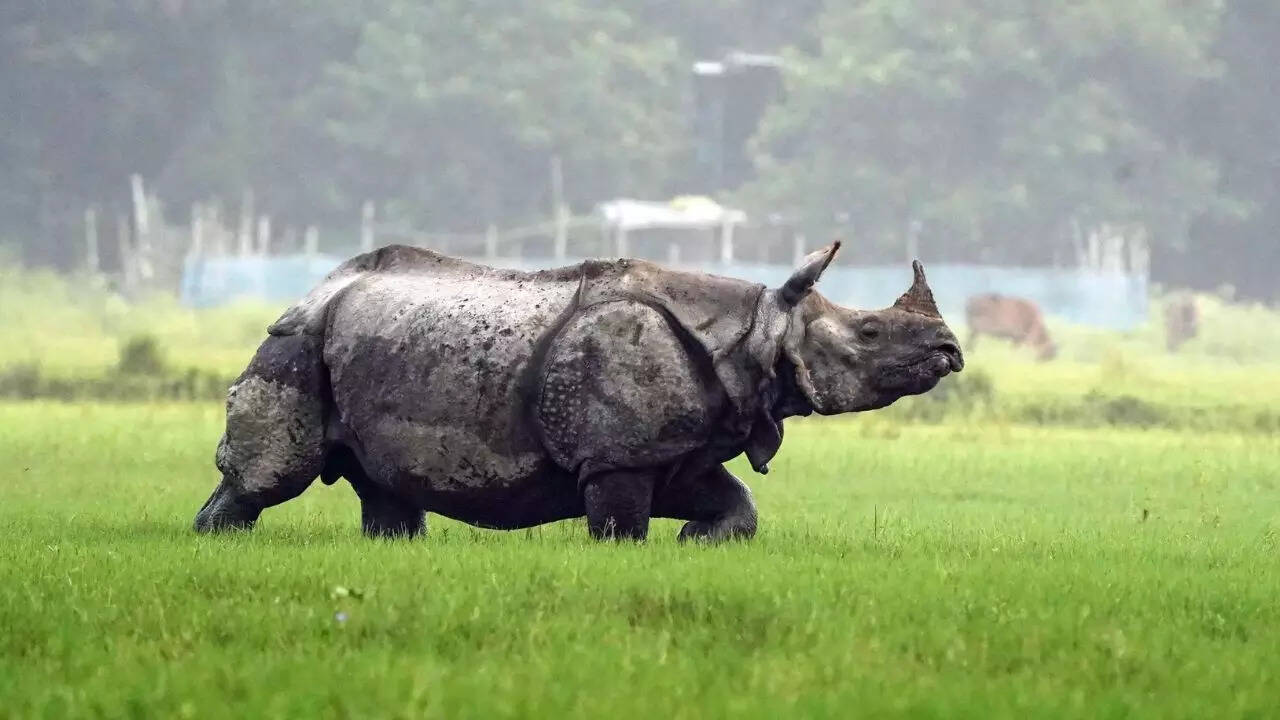
Long before the one-horned rhinoceros became confined to the swampy grasslands and riverine forests of Assam and Bengal — and a lone national park in Uttar Pradesh — the massive animal thundered across landscapes far to the south. Archaeologists say rhinos once roamed the foothills of the Western Ghats near present-day Coimbatore, rewriting what we know about the species’ ancient range in India.Archaeologists now say that nearly 3,500 years ago, rhinos roamed parts of south India — a revelation pieced together not from myth or folklore, but from four small bone fragments buried deep in a Neolithic site at Molapalayam.
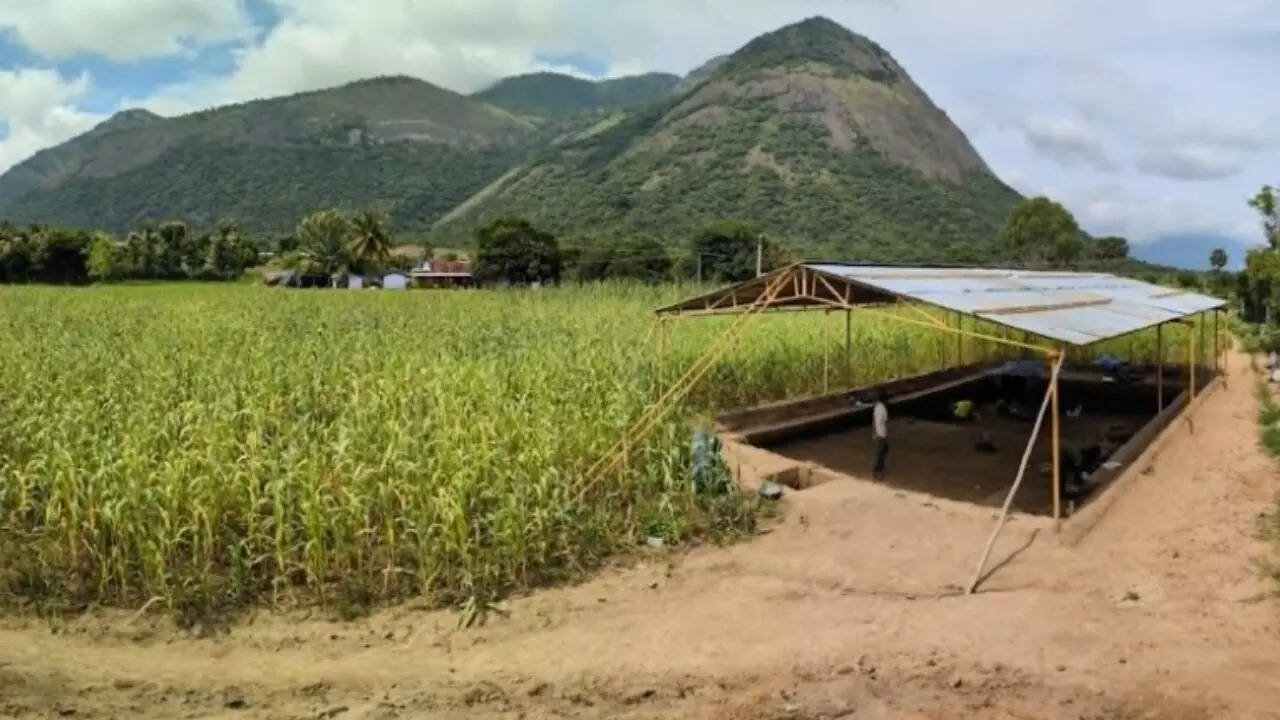
The discovery, scientists say, quietly but decisively rewrites the known historical range of one of India’s most iconic species.Rhino Bones Fragments Discovery Changes India’s Wildlife MapDuring two seasons of excavation in 2021 and 2024, archaeologists unearthed an extensive collection of animal remains at Molapalayam — a site that had already drawn attention for its insights into early pastoral life. Among the bones of cattle, deer and antelope were four fragments that stood out.They turned out to be two metacarpals and two carpals from the foot of an Indian rhinoceros.“The anatomical features of the bones match the rhino bones available in the reference collection,” said Abhayan G S, a faculty member at the department of archaeology, University of Kerala, who studied the samples along with research scholar Ajith M.For researchers, the identification was unmistakable.
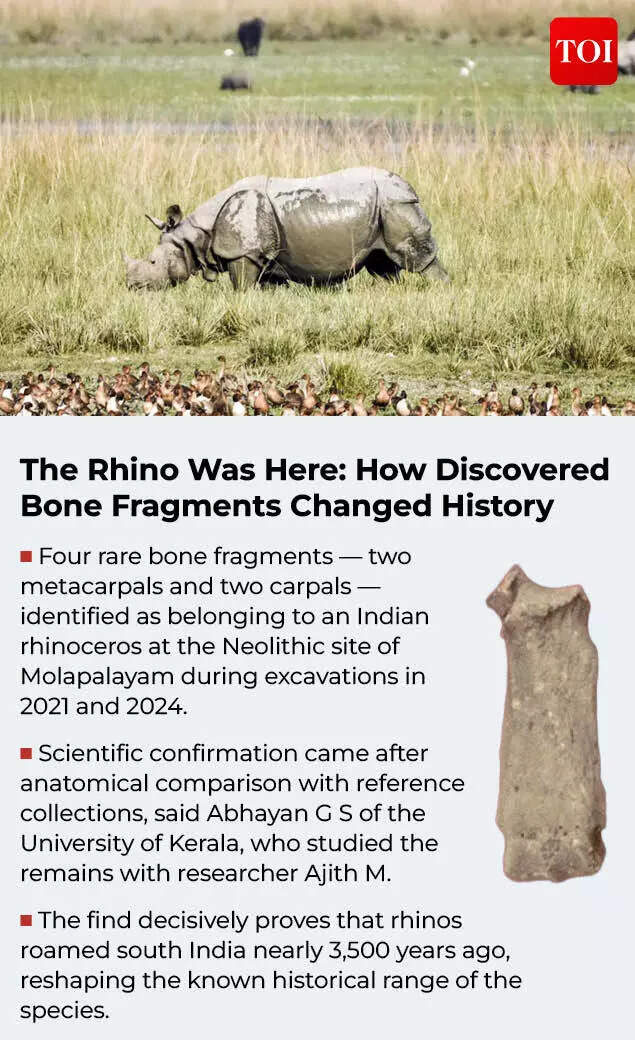
Molapalayam Find Pushes Rhino Range Far SouthThis is only the third confirmed discovery of rhinoceros remains in south India. Earlier, archaeologists had found rhino bone fragments at Payyampalli in Tirupattur district and a fragmented fossilised skull at Sathankulam in Thoothukudi district.“This is a significant find, as rhinos survived up to the middle of the second millennium BCE. According to the current zoogeography, the animal is restricted to Assam and the northeastern plains of India,” Abhayan said.The Molapalayam evidence pushes that boundary far south, into Tamil Nadu.The Molapalayam site itself offers a vivid snapshot of early human life. V Selvakumar, an archaeologist from the department of maritime history and maritime archaeology at Tamil University, Thanjavur, who excavated the site, presented the findings at an international symposium in Madurai.“A faunal analysis reveals that people who lived here constituted a pastoral community that reared cattle, sheep and goats. They also hunted animals such as deer and antelope. Their food also included a diverse range of small millets and pulses,” Selvakumar said.Researchers Sathish Naik and Aditya of Deccan College identified plant remains from the site, strengthening evidence of a mixed pastoral and hunting-based economy.Radiocarbon dating places the settlement between 1,600 BCE and 1,400 BCE.
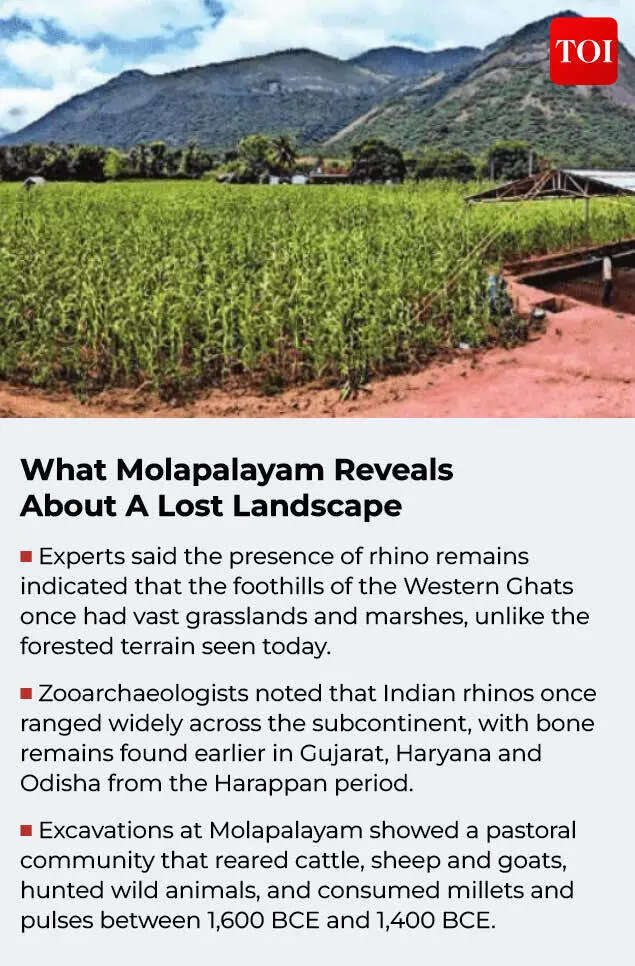
Harappan-Era Finds Indicate India’s Rhinos Had Vast RangeExperts say the presence of a rhino here also hints at a dramatically different prehistoric landscape.“The animal needs grasslands and marshes. The foothills of the Western Ghats might have had grassland, as a single rhino requires many square kilometres of grassland for food,” said Pramod Joglekar, a zooarchaeologist and retired professor of archaeology at Deccan College, Pune.Similar discoveries, he noted, have been made elsewhere. “In Gujarat and Haryana too, we found bone remains of the Indian rhino from the Harappan period. We also found bone remains in Odisha. It shows that rhinos were once spread across the Indian subcontinent,” he said.
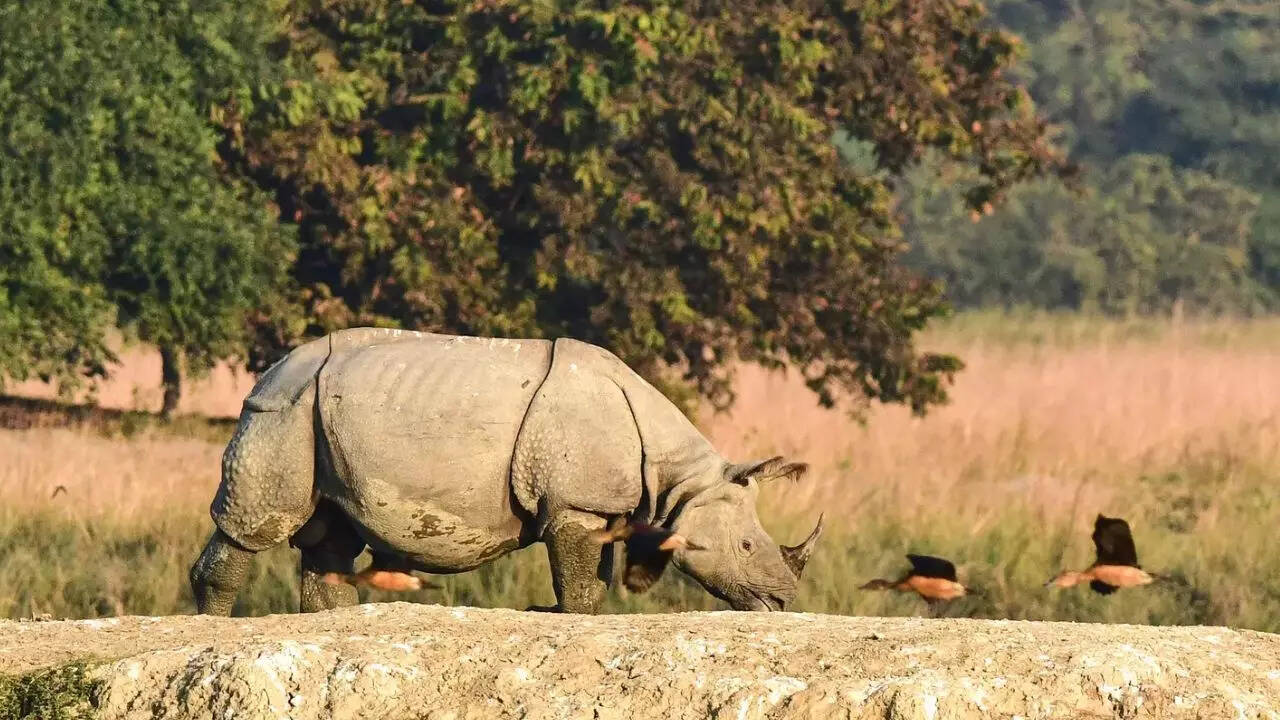
Rhino Tally Up From 600 In 1960s To 3,000 In Assam: Govt DataWhile archaeology reveals how far the rhino once ranged, conservation data shows how narrowly it survives today — and how close it came to vanishing.Assam has recorded a five-fold increase in its one-horned rhinoceros population over nearly six decades, rising from about 600 in the 1960s to over 3,000 in 2024, according to state government data released on World Rhino Day.These rhinos are listed as “vulnerable” on the IUCN Red List.Of India’s total rhino population, around 80% reside in Kaziranga National Park and Tiger Reserve, followed by 4% in Orang National Park, 3% in Pobitora Wildlife Sanctuary and 1% in Manas National Park. Outside Assam, 9% are found in Jaldapara National Park and 2% in Gorumara National Park in West Bengal, while 1% live in Dudhwa National Park in Uttar Pradesh.Assam chief minister Himanta Biswa Sarma attributed the recovery to sustained conservation efforts.“Rhinos are synonymous with the identity of Assam. They are our pride and the crown jewel of our biodiversity. Ever since we assumed office, we have taken various initiatives to protect the prized species, expand its habitat and ensure its safety,” Sarma said.He highlighted habitat expansion measures, noting that 200.7 sq km was added to Orang National Park and 195 sq km to Burachapori Wildlife Sanctuary. Another 12.8 sq km of rhino habitat was restored in the Laokhowa-Burachapori complex after being freed from encroachment.
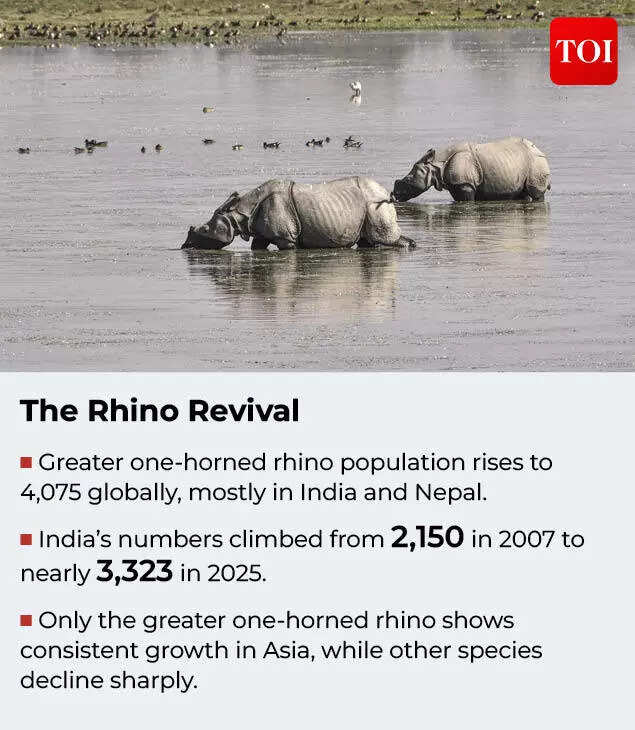
A Rare Conservation Success In AsiaThe recovery in Assam mirrors a broader regional trend. The 2025 State of the Rhino report, published by the International Rhino Foundation, estimates the global population of the greater one-horned rhino at 4,075, with 3,323 in India and 752 in Nepal.The figure marks a steady rise from 4,014 in 2022 and a dramatic jump from 2007, when India had about 2,150 rhinos and Nepal around 400.Experts say this stands in sharp contrast to other rhino species worldwide. Of the five surviving species, only the greater one-horned rhino shows consistent growth in Asia.White rhino numbers fell to 15,752 in 2024 from 15,942 in 2021. Javan rhinos have dwindled to around 50, and Sumatran rhinos remain critically endangered, with just 37–47 individuals left. Black rhinos, however, have seen modest gains, reaching 6,788 across 12 African countries, according to IUCN and TRAFFIC data.“This is one of the few conservation success stories in Asia, and India’s progress is remarkable. Back in 2007, the country had just 2,175 rhinos. Today, Assam leads with nearly 2,900,” said Dr Amit Sharma, national lead for rhino conservation at WWF-India.
West Bengal Sees 70% Growth In Rhino Population Over 12 YearsWest Bengal, too, has recorded significant gains. The state has seen over 70% growth in rhino numbers in the past 12 years, with the 2025 census estimating 392 (±6) rhinos, up from 229 in 2013.According to the forest department, Gorumara National Park hosts an average of 61 (±3) rhinos, with adults forming about 60%–62% of the population. The sex ratio stands at 1.6 females per male.Jaldapara National Park, which has the second-largest rhino population in India after Kaziranga, recorded an estimated 331 rhinos in 2025. Adults make up roughly 70%–72% of the population, with a sex ratio of 1.1 females per male.“With a steady population growth rate, strong calf numbers, and healthy distribution across different age-groups, the park is on track to support a sustainable rhino population,” said Jaldapara wildlife division DFO, Parveen Kaswan.
According to officials, the census was conducted across Jaldapara National Park, Gorumara National Park, Chapramari Wildlife Sanctuary and parts of Jalpaiguri reserve forests. The methodology used was direct counting based on sightings.“To ensure accuracy, the total rhino-occupied area was divided into blocks of 4 sq km each. In addition, fixed observation stations and observation lines were identified. Survey teams with 4 members each scanned each block on foot and on elephant back, recording rhino sightings, gender, age, physical features, their location, pictures etc. A total of 99 enumeration blocks were surveyed covering an area of 396 sq km. A total of 631 forest staff participated in the two-day census, supported by 85 kunki elephants”, said a forester.The greater one-horned rhinoceros is a vulnerable species, according to the IUCN Red List.(With inputs from A Ragu Raman)