

Robots and other automation technologies could replace 20% of U.S. jobs over the next two decades, according to economists.
Researchers with investment advisory firm Oxford Economics said in a report that roughly a fifth of jobs are highly vulnerable to such a shift, noting that tech able to replace most or all of the functions currently performed by human workers already exists and is commercially available.
Most vulnerable jobs
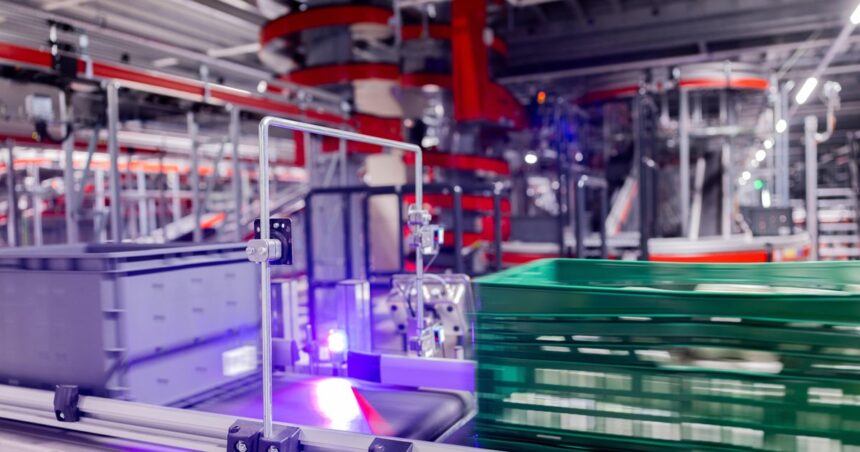
Around 60% of jobs in transportation and logistics have the potential to be automated over the next 20 years, making it the most vulnerable sector to automation, according to Oxford Economics.
“These jobs are not evenly distributed across the economy; they are, in fact, concentrated in a number of sectors where they make up an extraordinarily high amount of the workforce,” Oxford said in the report. “Transport and logistics is (with the exception of agriculture, which is quite small and is already highly automated) the sector with the highest potential for automation, as technologies that have made headlines recently (self-driving and warehouse automation) have moved from the R&D phase to the scaling-up phase.”
Oxford Economics evaluated more than 800 different occupations to determine their level of vulnerability to automation, based on job function, and the availability of tech that can perform tasks associated with a given role.
Nico Palesch, a senior economist at the advisory firm and the author of the report, said the focus on AI’s impact on white-collar employees has tended to overshadow public debate over how humanoid robots could impact physical work, such as driving trucks and warehouse work.
Other sectors that Oxford sees as more vulnerable to automation:
- Manufacturing
- Accommodation and catering
- Retail
- Wholesale
- Trade and extraction
Palesch emphasized that a job’s vulnerability to automation, even in the near term, doesn’t augur “an imminent jobs collapse or productivity boom.”
“[T]here are potential productivity gains and job losses on that front as well,” he told CBS News.
“Demand for work is not going to go away”
At first glance, hotel and catering jobs might seem to require a human touch. But Palesch noted that self-service kiosks can let customers check into hotels, while robots could take over some housekeeping functions.
“That being said, just because there is the potential for automation doesn’t mean these jobs are all going to be automated this year, next year or even within five years. Progress is incremental and ongoing.”
“Restaurants are not firing all cashiers on day one and replacing them. But as it becomes more widespread, they stop hiring cashiers as much,” he added.
Economists routinely express confidence that the latest crop of emerging technologies, including robots and AI, will boost the economy’s productivity, leading to job creation.
For example, a restaurant could open more locations and transfer employees who might previously have worked as cashiers to the kitchen, enabling it to serve additional customers, Palesch said.
“The demand for work is not going to go away, because together with automation comes the need to maintain robots, design robots, to teach people how to use robots,” he added.