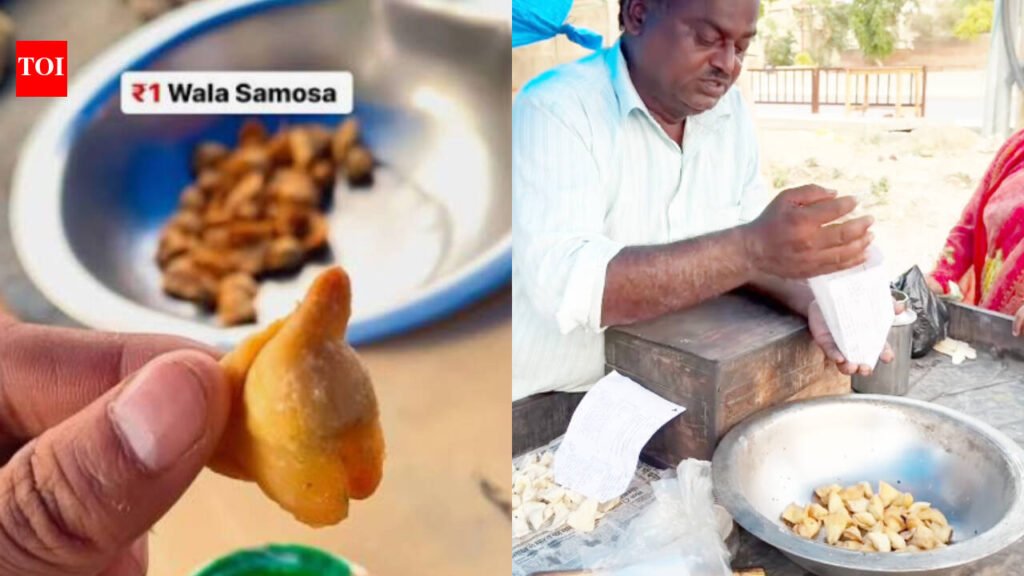
What can you get for Re 1 these days? In Prayagraj, apparently, a tiny samosa.A street vendor near Dhobi Ghat in Mumfordganj has caught the attention of food lovers with his bite-sized samosas, each reportedly priced at just ₹1. A video shared on Instagram by food creators Sahil & Priyanka shows the vendor serving the miniature snacks with green chutney.And while the price is enough to make anyone stop scrolling, the story behind the little samosas is just as interesting. According to the viral video, the vendor has been making and selling these mini versions for around 22 years.
A samosa, just much smaller
The snack looks like the familiar samosa most Indians know, only shrunk down to a size that makes it almost impossible to stop at one.The tiny samosas are fried until crisp and served with green chutney. There’s no elaborate presentation here, and that’s probably part of the charm. It’s the sort of street snack you can pick up for a quick bite without thinking too much about the bill.For people who grew up eating samosas with chai, the appeal is pretty obvious. A regular samosa can be filling. These little ones are more of a pop-in-your-mouth snack, making it easy to have two, three or more.The Instagram video has brought attention to a local food that appears to have been around long before it became social-media material. The exact daily sales, ingredients and current price history of the stall aren’t independently documented in the sources available, so the 22-year claim is best treated as information from the viral post.
The samosa has travelled a long way
There’s an interesting twist to the story of India’s favourite triangular snack: the samosa wasn’t originally from India.Food historians generally trace its early relatives to West and Central Asia. Medieval Arabic cookbooks from around the 10th to 13th centuries mention pastries called sanbusak, sanbusaq and sanbusaj, names linked to the Persian sanbosag. The snack travelled through trade routes and eventually reached the Indian subcontinent.By the Delhi Sultanate period, samosa-like dishes had become part of Indian food culture. The 14th-century traveller Ibn Battuta wrote about sambusak being served at the court of Muhammad bin Tughluq. Unlike today’s familiar aloo samosa, the version he described was filled with minced meat, nuts, onions and spices.The potato-filled samosa came much later. Potatoes themselves reached India after the Columbian exchange and gradually became part of Indian cooking. Over time, local cooks adapted the snack with potatoes, peas and Indian spices, helping create the version that’s now found everywhere from railway stations and college canteens to weddings and roadside tea stalls.
From royal kitchens to a ₹1 street snack
That’s perhaps what makes the Prayagraj find fun. A snack with a history stretching across continents and centuries has ended up as a tiny, affordable street-food bite.And the size isn’t the only thing drawing attention. At a time when even a simple tea-and-snack break can add up, a ₹1 samosa sounds almost like a throwback.Whether you’re passing through Mumfordganj or simply looking for an unusual local food find, these miniature samosas seem to have found their own little fan following online.Sometimes, street food doesn’t need fancy ingredients or a big price tag to get people talking. A crisp little samosa, some green chutney and ₹1 might be enough.